

This post is part of the Modern Classics series, spotlighting movies released since 2000 that have already earned a place among the all-time greats.
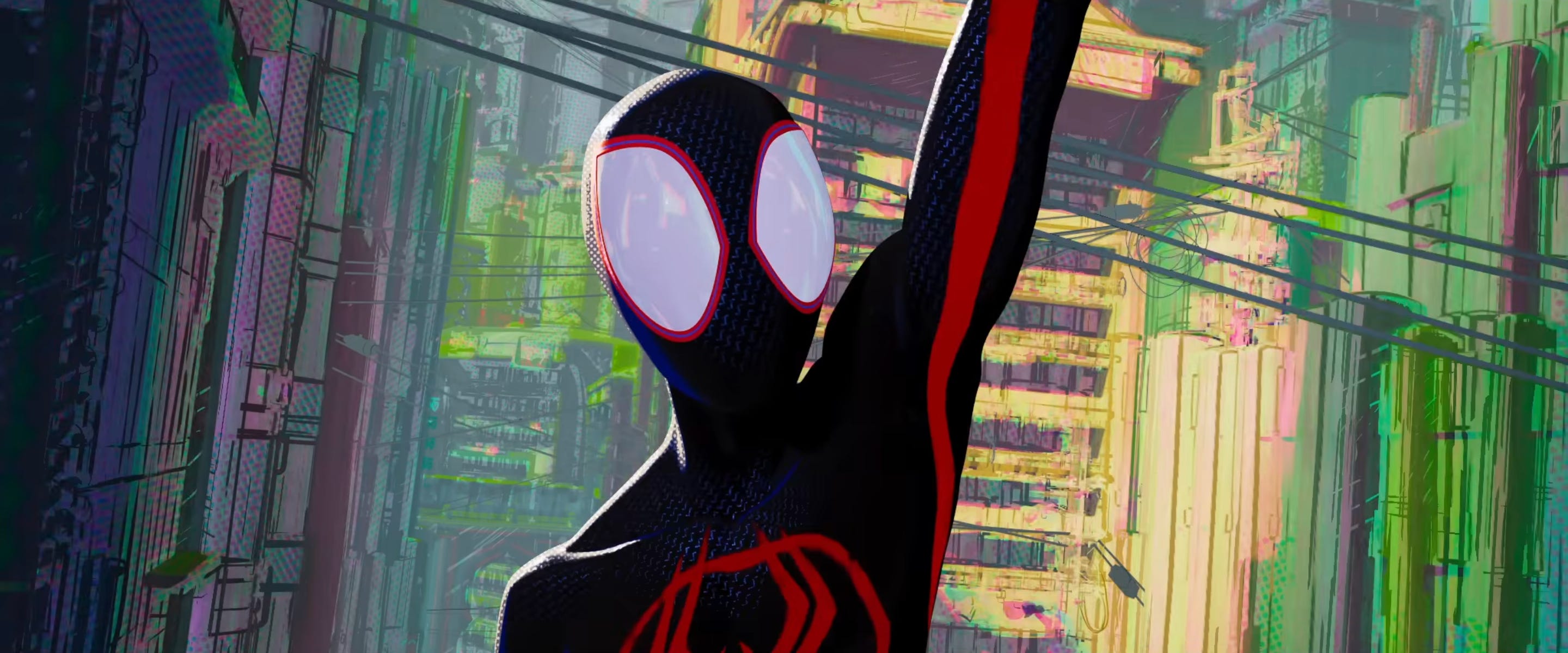
Key Moment
An infinite number of Spider-Man iterations chasing Miles Morales as he webs for his life across Nuevo York.
Killer Line
“Everyone keeps telling me how my story is supposed to go… Nah. I’m-a do my own thing.”
Standout Player
Hailee Steinfeld as Gwen Stacy. Miles may be the center of the story, but it’s just as much Gwen’s movie (the film starts with a 15-minute pre-credit Gwen sequence before we even get to Miles). And Steinfield’s voice work really brings to life both her inner anguish and exterior coolness. You are drawn to this character throughout the movie.
Why It’s a Classic
Beginning with a literal bang (a drumbeat), Across the Spider-Verse propels us into a narrative already in motion—and dares us to keep up.
We are flooded with so much sensory information in the first 10 minutes, you can feel the smoke smoldering from your ears. The visual palette wows with its watercolors and mixed styles (the flying DaVinci villain) while the ever-present and essential soundtrack thumps us along for the ride.
All that makes for a mind-blowing movie experience. But what really swings this Spider-Verse across the precipice into the realm of classic (and beyond its excellent predecessor) are what happens in the spaces between the brain-breaking, breathtaking propulsion.
There are several key moments in the first half when the freneticism slows and the movie calms to dig deeper into character. And not just Miles but the people in his orbit. Rather than throw the film into a lull, these scenes expand the tapestry and make the movie feel more epic (even, dare I say, Godfather-esque).
There’s this scene between Miles (voiced by Shameka Moore) and his policeman father (voiced by Brian Tyree Henry):
Unaware he’s talking to his son and not Spider-Man, Miles’ dad lets his guard down and shares his worries and struggles, telling Miles/Spider-Man: “You think you’re getting pretty good at being a parent, you think you got it lit. And then they go and grow up.”
Later in the movie, Miles and Gwen share this moment sitting upside down at the top of an NYC building:
It’s an eye-popping visual, with the flipped cityscape behind the characters, mirroring their state of mind. Hanging high above the city like no one else can, Miles tries to spit a little game. But really it’s about finding someone you can relate to. “I mean how many other people can you talk to you about this stuff?” Gwen says to Peter.
But the key scene, the one that takes the movie to another level is this one between Miles and his mom (voiced by Luna Lauren Velez):
They’re on a rooftop overlooking the city. It’s dusk. She’s trying to connect with Miles, feeling the chasm between them. He wants to unburden himself, tell her everything. She looks at him with pleading eyes... but he can’t do it. She sighs with disappointment.
But instead of getting frustrated or turning away, she approaches him with tenderness. She fixes his jacket and tells him to go chase after the girl. Then she delivers a heartbreaking monologue that includes these words:
“Wherever you go from here, you have to promise to take care of that little boy for me. Make sure he never forgets where he came from. And he never doubts that he’s loved.”
As a parent of two growing kids, this scene hits me like a particle collider every time. It perfectly encapsulates the push-and-pull feeling of wanting your kids to grow up and become independent people while also wanting to grab them and hug them and never let them go.
It’s in this scene, and all the calmer character moments, that Across the Spider-Verse reveals itself for what it truly is: A coming-of-age movie. Not just of Miles and Gwen, but of their parents too. We’re always transforming and struggling to become the next version of ourselves. That shit, unfortunately, doesn’t stop at adolescence.
Quick Takes
It’s been widely reported the extended chase sequence in Across the Spider-Verse took four years to complete. Here’s the quote from the film’s co-director Joaquim Dos Santos where that number comes from: “If you think about the Guggenheim sequence, that was the first thing that we storyboarded, that was the last thing that locked animation in the film. So that was the entire four years that sequence was worked on.”
This is a great movie, well deserving of classic status, but is it the best Spider-Man movie we’ve gotten? For my money, probably. Though Sam Raimi’s Spider-Man 2 is in contention. While I like the Tom Holland Spider-Man movies, I don’t think any of them reach the heights of this (with Homecoming being the best).
I was shocked to find out this movie did not win the Academy Award for best animated film. It was beat out by The Boy and the Heron. I know people love Miyazaki and he’s undoubtedly a legend in the field. But watching this movie and the things it does with animation, I mean, c’mon.
You said it, 'eye-popping visuals'... It is spectacular and creative and impossible to forget. The uniqueness of this style of animation I think was underrated and I for one think should have been given more recognition as well.
Just when I think I've escaped the grasp this film has over me, I'm sucked right back in! Nicely written!